Measuring Impact
Through the efforts of our partner organisations, we aim to measurably help 200,000 families each year reach reasonable standards of living.
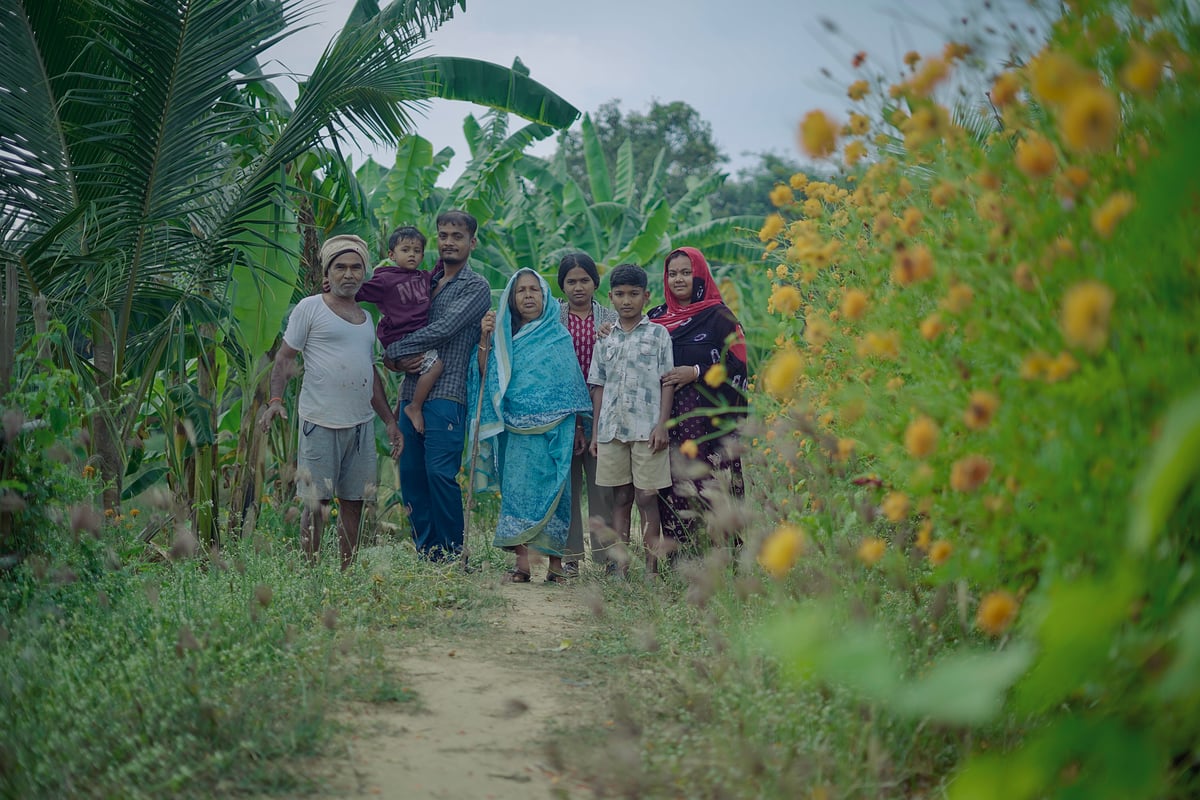
The Foundation’s core measure of long-term progress is the number of Indian families that reach a reasonable standard of living within a generation. At current prices, we define this as annual household consumption of ₹300,000 in rural India and ₹450,000 in urban India. Based on data from the last Household Consumption Expenditure Survey (HCES) 2024, curated by data for India, it is estimated that a little less than one-fifth of households are above these thresholds. We aspire to see at least half of all Indian households reach these standards over a generation. Central to this vision is the inclusion of the most disadvantaged communities in India’s growth story, supported by institutions that advance equality, justice, capability, and fraternity.
For long-term horizon work, we measure whether the institutional and structural conditions that enable inclusive growth are improving. This includes shifts in policies, regulations, and administrative practices; the diffusion and replication of ideas without continued philanthropic funding; adoption of new data systems or measurement approaches; reductions in frictions faced by firms, workers, and citizens; and evidence that supported work has influenced public debate, government decision-making, or market behaviour. Because attribution is inherently difficult at this level, our emphasis is on contribution: whether the world plausibly moved in a better direction with our support than it would have otherwise.
For shorter-term horizon work, we track outcomes that can be more directly linked to partner organisations and their programmes. This includes improvements in human capital trajectories, such as participants accessing higher-quality education or employment pathways, crossing defined prosperity thresholds, or experiencing reduced income volatility and greater resilience to shocks. It also includes markers of voice and dignity, such as increased representation, leadership emergence within disadvantaged communities, legal or policy wins that expand rights or access, and greater inclusion in civic and public discourse. These nearer-term indicators serve both as evidence of organisational effectiveness and as leading indicators of longer-term systems change.
We measure the impact of our partner organisations through a combination of partner-reported outcomes, independent verification where feasible, and longitudinal tracking of cohorts or institutional effects over time. Rather than imposing a single uniform metric, we align measurement with each partner’s theory of change while ensuring comparability across the portfolio through common outcome categories. We assess not only whether programmes deliver intended results, but also whether approaches demonstrate potential for scale, replication, or policy influence.
Finally, we distinguish between project performance and portfolio health. At the portfolio level, we track whether we are backing the right mix of high-risk innovation, institution-building, and direct outcome programmes; whether we are learning quickly from failures and surprises; and whether we are willing to exit work that does not show promise. This ensures that our resources are continuously redeployed toward the areas most likely to contribute to inclusive growth over the long term.
Get in touch
If you're looking to collaborate, discuss an idea, or have questions, please reach out to us.
Contact Us